
Shaping the Future of Architectural Visualization with Augmented Reality
At Archipixure, we stand at the forefront of integrating augmented reality (AR) into architectural visualization, transforming how we design, present, and experience spaces. As we explore the horizon of AR's possibilities, it's crucial to acknowledge the technological strides and the challenges that accompany this journey.
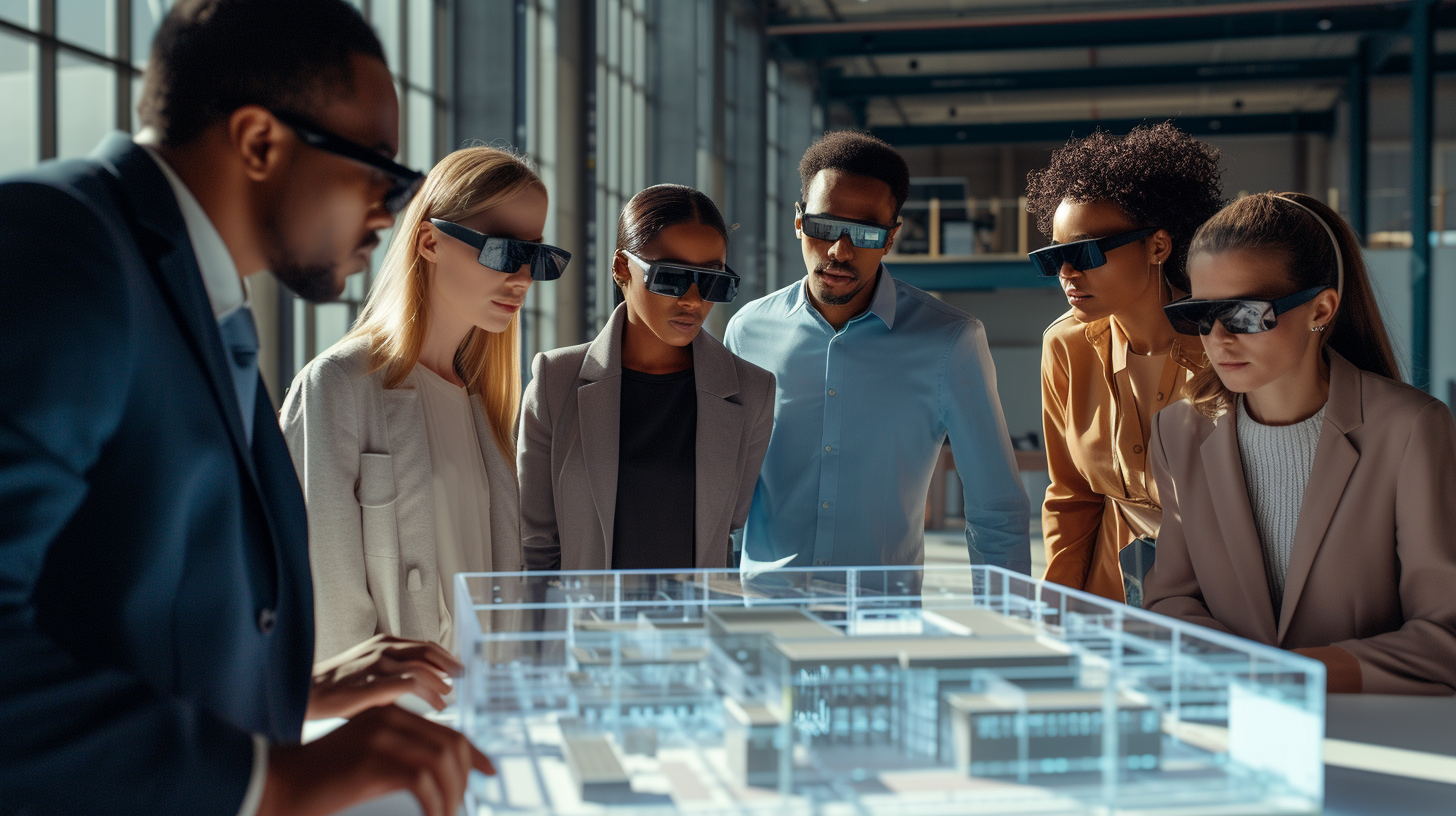
The Current State of AR Technologies
The advent of Meta Smart Glasses has paved the way for AR technologies to be woven into the fabric of our daily lives with a design that blends into socially acceptable form factors. While these glasses have yet to incorporate visual displays, their existence underscores the potential of smart tech glasses to become ubiquitous in our personal and professional lives.
On the other end of the spectrum, the Apple Vision Pro headset represents a leap in AR and VR technologies with its incorporation of cameras and Micro-OLED technology for advanced high-resolution displays. Despite its groundbreaking capabilities, the Vision Pro's size and cost may be significant barriers to widespread adoption, highlighting the need for solutions that balance performance, affordability, and design.
The Need for Sustainable Innovation
As we marvel at these technological advancements, we must also address the environmental impact of rapid tech proliferation. The challenge of depleting natural resources and managing electronic waste from outdated technology is becoming increasingly pressing.
Exploring Transparent OLED Technology
Another exciting development that parallels our journey towards more immersive AR experiences is the advent of Transparent OLED technology. Manufacturers like LG are leading the way with Transparent OLED displays that promise to revolutionize how we interact with digital content in physical spaces. These innovative displays offer clear, vivid images while maintaining transparency, allowing for a seamless blend of digital and physical worlds. This technology not only enhances retail and exhibition spaces by enabling dynamic visual interactions but also hints at the potential for wearable AR devices. Transparent OLED technology lays the groundwork for future AR glasses that could offer clear, unobstructed vision paired with digital overlays, making architectural visualization more interactive and immersive than ever. To see more about how Transparent OLED is shaping the future of display technology, visit LG's Transparent OLED Signage.
A Glimpse into the Future with Supramolecular Ink Technology
Enter the game-changing development in sustainable tech: supramolecular ink technology. This innovative approach, highlighted in recent research (Read more about supramolecular ink technology), offers a sustainable solution to creating flat-panel displays for wearable tech. By leveraging materials that are both affordable and eco-friendly, supramolecular ink technology stands to revolutionize the production of AR devices, addressing the critical issues of size, weight, cost, and environmental impact.
Archipixure's Vision
At Archipixure, we believe that the future of architectural visualization lies in harnessing AR's potential responsibly and innovatively. The advancement of sustainable technologies like supramolecular ink aligns with our desire to create immersive, accessible, and sustainable architectural experiences.
As we continue to explore and integrate these technologies, our goal remains clear: to redefine architectural visualization in a way that is both forward-thinking and grounded in sustainable practices. Join us as we embark on this exciting journey towards a more innovative and sustainable future in architecture.